Science Faculty Knowledge Management
Core Knowledge
NEWSTART
- We have chosen NEWSTART as our core knowledge because, as a faculty, we believe in an integrated approach to health: The knowledge of what should be, what is and what can be:
- Weimar, a lifestyle center in the United States developed the acronym “NEWSTART”. Today, many lifestyle centers around the world use it to teach people how to optimize their health. The World Health Organization (WHO, 2024) states that NCDs account for 74% of global mortality. In the report they say that in order to reduce this mortality rate, it is important to “reduce the risk factors associated with” NCDs (Prevention and control para. 1). The understanding and practice of NEWSTART prevents/reverses NSDs
- Nutrition-A plant-based diet decreases the risk of all-cause mortality (Kim et al., 2019)
- Exercise-Regular and continuous exercise reduces mortality (Yu et al. 2025)
- Water- besides the importance of drinking sufficient water daily (8-10 glasses, on average), the external use of water (hydrotherapy) has many healing properties (Alieva, B., et al., 2018)
- Sunlight- No research links moderate sun exposure to all-cause mortality. All-cause mortality is higher in the winter than in the summer. It has important benefits for many body systems (Weller, R. B., 2024)
- Temperance-The importance of avoiding all things that are harmful and maintaining balance in the good things.
- Air- Pure air is important: Both indoor and outdoor air pollution are causes of high mortality, globally (UNICEF, 2024).
- Rest- There is an optimum sleep duration and sleep pattern which results in a decrease in mortality (Svensson et al., 2021).
- Trust in God-Evidence suggests that stress-related disorders are also related to all-cause mortality (Tian et al., 2022). Stress resulting from the quality of our social relationships impact our health negatively (Love et al., 2023). Conversely, prayer (talking to God) has a positive impact on our well-being (Newman, D. B.,2023)
👇Click on the links below:
Best Practices
Research and Publications
2023
- Lee, S. Y., Mojulat, M. B., Thangaperagasam, G. J. C., Surugau, N., Wei, S. A. T. S., & John, O. D. (2023). A review on the cytotoxic and antimicrobial properties of Xanthones from Cratoxylum cochinchinense: Bioactivities of Cratoxylum cochinchinense. Journal of Tropical Life Science, 13(1), 219-230.pdf
- Yilin, L., & Newell, M. (2023). The Relationship between Physical Activity in a Natural Environment and Symptoms of Anxiety and Depressive Disorders:A Cross-Sectional Study Among University Students. Human Behavior, Development & Society, 24(1).pdf
- The Perceptions of Gender-Based Violence_A Cross-Sectional Study Among University Students at Asia-Pacific International University.pdf
2022
- John, O. D., Mushunje, A. T., Surugau, N., & Mac Guad, R. (2022). The metabolic and molecular mechanisms of α-mangostin in cardiometabolic disorders. International Journal of Molecular Medicine, 50(3), 120.pdf
- T Anthoney Swamy, Aldrich Titus Anthoney and Wilai Laolee (2022). Determination of Iron Content in Six Indigenous Green Leafy Vegetables Consumed in Muak Lek, Thailand. Rasayan Journal of Chemistry (Scopus journal). 15(1), 197-203.pdf
Community Services
Knowledge Exchange
2025

2024
APRU Global health Conference November 4-6, 2024
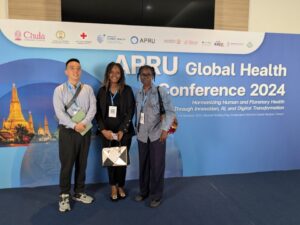
- APRU Global Health Conference 2024 reported by Dr Maxine Newell.pdf
- APRU reported by Mr. Luther Ku.pdf
Steps in Qualitative Data Analysis Seminar, 2024